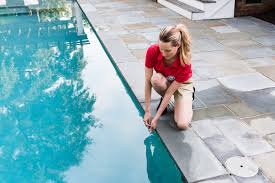
A sudden summer storm in Upland, California, can swiftly dilute your pool’s pristine balance, turning safe waters cloudy and hazardous. With the region’s erratic rainfall patterns-averaging just 17 inches annually but prone to intense bursts-maintaining chemical equilibrium demands vigilance, as advised by the California Pool & Spa Association. Discover how rain erodes chlorine levels, shifts pH and alkalinity, introduces pollutants, and learn essential post-storm testing, corrections, and preventive tactics to restore clarity fast.
Rainfall Patterns in Upland, California
Upland, California, experiences an average annual rainfall of 18 inches, with approximately 70% of this precipitation occurring between November and March, according to National Oceanic and Atmospheric Administration (NOAA) data from 1991 to 2020. This seasonal pattern renders winter storms a significant concern for pool owners in the Inland Empire region.
Reports from the California Department of Water Resources indicate that El Nio events can intensify these storms by 20% to 30%, thereby increasing runoff into swimming pools. The dry summers in the Inland Empire lead to the accumulation of dust and debris in yards, which heavy winter rains subsequently dilute and direct toward pool filters, frequently resulting in system clogs.
For example, a storm in San Bernardino County in 2023 delivered 4 inches of rain within 24 hours, affecting more than 500 pools with excessive sediment, as documented by local health department records.
To mitigate these risks, pool owners are advised to monitor seasonal forecasts through the NOAA Climate Prediction Center website and to conduct weekly pH level testing during the fall. Additionally, debris should be cleared from drains prior to rainfall events, and protective measures such as leaf nets or skimmers-for instance, the Skim-A-Round model, priced at $40-should be installed to facilitate maintenance during the wet season.
How Rain Dilutes Pool Chemicals
Rainwater, characterized by a neutral pH ranging from approximately 5.6 to 7.0, can swiftly disrupt the chemical equilibrium of a swimming pool. For instance, according to calculations provided by the Pool & Hot Tub Alliance, two inches of rainfall in a 15,000-gallon pool is equivalent to the addition of 1,500 gallons of fresh water.
Chlorine and Sanitizer Reduction
A moderate rainfall event can rapidly reduce free chlorine levels from 3 ppm to below 1 ppm within hours, thereby heightening susceptibility to pathogens such as E. coli, as documented in CDC pool safety reports.
To mitigate this risk, it is essential to maintain optimal free chlorine concentrations between 2 and 4 ppm following precipitation. Rainfall typically dilutes sanitizer efficacy by 20-40% per inch of accumulation, in accordance with NSF/ANSI 50 standards for pool performance.
- Begin by testing the water using the Taylor K-2006 test kit (priced at $28) to obtain precise measurements.
- If levels fall below 1 ppm, administer a shock treatment with 1 pound of calcium hypochlorite per 10,000 gallons to promptly restore chlorine concentrations.
- A frequent oversight involves neglecting cyanuric acid levels that drop below 30 ppm, which exacerbates UV-induced chlorine degradation; counteract this by adding stabilizer in increments of 10 ppm to safeguard chlorine stability.
- Retest the water after 4-6 hours and make necessary adjustments to ensure ongoing safety and efficacy.
pH and Alkalinity Shifts
Rainfall frequently decreases the pH of swimming pools by 0.2 to 0.5 units due to its inherent acidity, which can shift alkalinity levels from 80 to 120 parts per million (ppm) to below 60 ppm. This change may result in corrosion of metal fixtures, as indicated by the National Swimming Pool Foundation.
This effect occurs because rainwater, with a pH of approximately 5.6, reacts with bicarbonate ions, diluting total alkalinity (TA) by 10 to 20 ppm per inch of rainfall, according to studies from the Orenda Institute. To prevent corrosion while avoiding scaling, maintain a Langelier Saturation Index (LSI) between 0 and +0.3, which can be calculated using the free PoolMath application.
Recommended corrective measures following rainfall:
- Immediately test the pH and total alkalinity (TA) using a Taylor K-2006 test kit.
- To increase TA, add baking soda at a rate of 1.5 pounds per 10,000 gallons to raise it by 10 ppm; ensure circulation for 4 to 6 hours.
- If the pH is below 7.4, adjust it using soda ash (avoid muriatic acid, as it would further lower the pH).
For example, a swimming pool in Upland, California, sustained $2,500 in heater corrosion damage after a 2-inch rainstorm reduced TA to 40 ppm, highlighting the critical importance of timely water balancing.
Contaminants Introduced by Rain
According to USGS water quality studies on urban runoff, stormwater runoff in Upland may introduce nitrates and phosphates at concentrations of up to 5 mg/L. These elevated levels can promote excessive algae growth and contribute to cloudiness in pools.
Acidity and Local Pollutants
In San Bernardino County, acidic rainfall-reaching pH levels as low as 4.5 during storms-combined with urban pollutants such as phosphates from fertilizers, can significantly increase microbial loads. County health department data indicate that E. coli counts may rise up to tenfold following such events.
Pool owners can effectively mitigate these risks by addressing three prevalent post-storm challenges through targeted interventions.
- Acidity can erode plaster pool walls; therefore, test the pH and adjust it to the range of 7.2-7.8 using soda ash at a dosage of 6 ounces per 10,000 gallons to increase pH by 0.2 units.
- Pollutants often elevate phosphate levels above 0.5 ppm, promoting algal growth; employ a LaMotte test kit for precise measurement, followed by the application of Polyquat 60 algaecide at 1 ounce per 10,000 gallons.
- Bacterial runoff can substantially increase E. coli concentrations; treat the water by shocking it with a non-chlorine oxidizer, such as potassium monopersulfate, at 1 pound per 10,000 gallons.
In a 2022 case involving a pool in Upland, water clarity was restored within 48 hours through the use of flocculant and vacuuming, in full compliance with California Health & Safety Code Section 116065 regarding sanitation standards.
Immediate Post-Storm Assessment
Within 24 hours following a storm, it is essential to inspect the pool in Upland for accumulated debris, which may introduce 50-100 pounds of organic matter into a standard residential pool. This accumulation has the potential to clog filtration systems and diminish water circulation by up to 30%.
To restore the pool safely, adhere to the following procedural steps, which collectively require approximately 1-2 hours. Protective gloves should be worn when handling any contaminants.
- Conduct a thorough visual inspection for structural damage, such as cracks or overflow (approximately 15 minutes). Mitigate erosion resulting from overflow by promptly applying a pool cover.
- Remove surface debris using a skimming net, for example, the Orium leaf skimmer (available for $15).
- Vacuum the pool floor with a manual vacuum head, proceeding in sections to prevent overloading the filter system.
- Backwash the filter-for sand or diatomaceous earth (DE) filters, continue running water until it appears clear (5-10 minutes).
- Examine the pump and associated equipment for any signs of water intrusion.
A frequent oversight involves neglecting checks for overflow, which can precipitate structural complications. Such issues may be averted by implementing routine pool covers in accordance with CDC guidelines for pool safety.
Testing Pool Chemistry After Rain
Post-rainfall testing utilizing a dependable kit, such as the LaMotte ColorQ Pro 7 ($200), enables the detection of chlorine levels as low as 0.5 ppm and pH variations down to 6.5, thereby ensuring adherence to California’s pool health regulations.
Testing Tools and Methods
| Tool Name | Price | Key Features | Best For | Pros/Cons |
|---|---|---|---|---|
| LaMotte ColorQ | $200 | Digital photometer; pH/chlorine/alkalinity | Professional accuracy | Pros: Accurate readings; Cons: Expensive |
| Taylor K-2006 | $28 | Liquid reagents; full FAS-DPD testing | Homeowners needing detail | Pros: Affordable; Cons: Subjective color matching |
| AquaChek Strips | $10/pack | 7-way test strips; quick results | Quick daily checks | Pros: Easy to use; Cons: Less precise |
| Seneye Monitor | $300 | Continuous USB sensor; pH/ammonia | Real-time monitoring | Pros: Real-time data; Cons: Setup required |
| Hach Pocket Colorimeter | $400 | Lab-grade; phosphates/nitrates | Advanced analysis | Pros: Highly precise; Cons: Professional use |
For do-it-yourself users in Upland, where fluctuating rainwater impacts pool chemistry, the Taylor K-2006 provides exceptional precision in measuring chlorine and pH through its reagent-based methodology, making it suitable for comprehensive post-rainfall assessments. Conversely, AquaChek test strips offer expedited results for standard evaluations, yielding outcomes in mere seconds with minimal effort.
Both instruments feature a brief 10-minute acclimation period, rendering them approachable for novice operators.
Corrective Steps for Chemical Balance
To restore chemical balance in a swimming pool after rainfall, targeted adjustments are essential. For a 20,000-gallon pool, this may involve adding 2-4 pounds of chlorine shock to achieve a concentration of 5-10 parts per million (ppm).
Such measures effectively mitigate the 20% risk of algae blooms, as documented in studies by the Pool Operator’s Association.
Replenishing Sanitizers and Adjusters
To mitigate dilution, replenish chlorine levels using liquid sodium hypochlorite (10% solution; 1 gallon per 10,000 gallons increases free chlorine by 5 ppm) and adjust calcium hardness to 200-400 ppm with calcium chloride, while adhering to APSP standards to prevent scaling.
Adhere to the following numbered steps for comprehensive pool recovery:
- Retest the water using a digital tester, such as the LaMotte ColorQ Pro 7 ($150), targeting 1-3 ppm free chlorine and a pH of 7.2-7.8.
- Introduce sanitizer if levels are low-employ dichlor granules (2 oz per 10,000 gallons to achieve a 5 ppm increase).
- Balance total alkalinity to 80-120 ppm using sodium bicarbonate (1.5 lbs per 10,000 gallons per 10 ppm increase).
- Adjust pH with soda ash if below 7.2 (6 oz per 10,000 gallons).
- Circulate the water for 4-6 hours; incorporate a metal sequestrant (e.g., Jack’s Magic, 1 qt per 20,000 gallons) to avert staining.
According to CDC guidelines, this protocol prevents algae outbreaks, potentially saving $300-500 in professional cleaning costs.
A frequent oversight involves bypassing water tests, which can lead to chloramine accumulation-remedy this by shocking the pool to 10 ppm chlorine. Total time required: 45-60 minutes.
Preventive Measures for Future Storms
Installing a mesh safety cover, priced between $300 and $500, prior to the rainy season in Upland can reduce debris entry by 80% and minimize water dilution by restricting rainwater ingress, in accordance with recommendations from the California Pool & Spa Association.
To further safeguard the pool, implement the following five specific practices:
- Install automatic covers or nets, such as the Coverstar model ($400), which can block up to 90% of debris.
- Elevate chemical reserves by storing an additional 20% of chlorine indoors to prevent washout during heavy rains.
- Incorporate rain sensors into auto-fill systems, for example, the Waterpik sensor ($100), to avoid unnecessary dilution.
- Perform weekly pre-storm water testing, adjusting chlorine levels to the high-normal range (4 ppm).
- Establish landscape barriers, such as windbreaks, to reduce debris accumulation by 50%.
For example, a pool owner in the Inland Empire decreased maintenance time by 40% through the use of a Dolphin Nautilus robotic cleaner ($500) following rainfall events.
Adhere to the Environmental Protection Agency’s (EPA) guidelines on sustainable pool management to promote water conservation, with a focus on minimizing refill requirements.